
God’s Call Means Leaving
By Michael Kelley
The first eleven chapters of Genesis are sometimes called chapters of “primeval history” - that’s because they are the earliest history of the world, and because they are, they deal in matters common to all humanity rather than local history. And throughout those chapters, we have seen three occasions of God’s judgment for sin: we saw humans banished from the garden, humankind largely destroyed by the flood, and then human beings divided by diverse languages. In addition to those three judgments, we have seen five different curses: the serpent was cursed, the ground was cursed, Cain was condemned to wander the earth, Canaan was cursed to servitude, and the peoples were cursed with confused languages.
When you look at it like that, there hasn’t been a lot of particularly uplifting news. But Genesis 12 presents us with a new affirmation of God’s commitment to humankind.
The Lord said to Abram: “Go from your country, your people and your father’s household to the land I will show you” (Gen. 12:1).
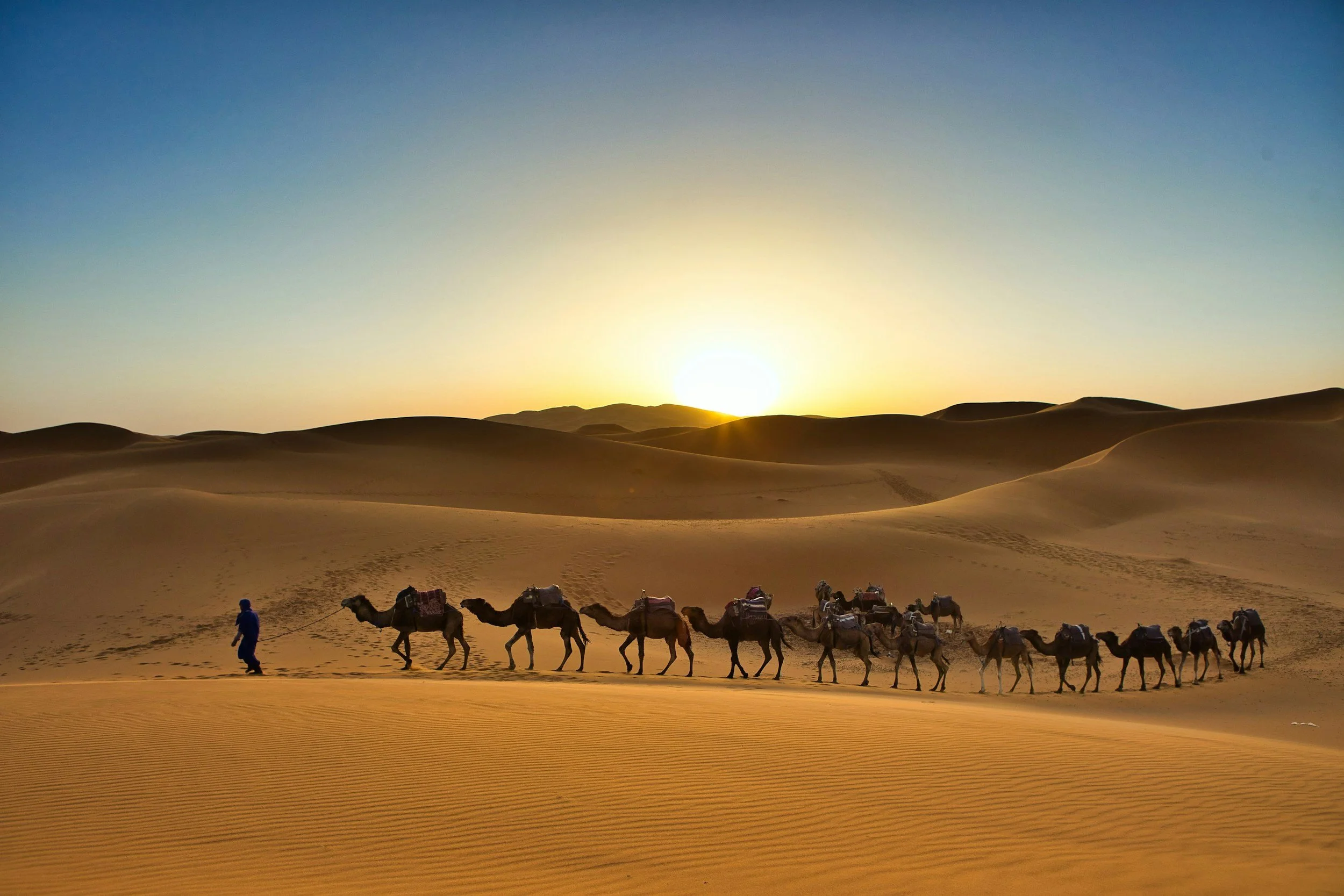
Abram, along with his family, was in Haran, and God called him to leave. So there was a literal, physical leaving that needed to happen as part of God’s call. But that’s not all.
In 1938, Abraham Maslow spent time with the Siksika Nation in Alberta, Canada. He found a culture focused on generosity and communal success rather than individual scarcity. This experience, combined with his desire to study healthy, high-achieving humans instead of psychological illness, led to his 1943 theory of human motivation, which eventually became what we know as Maslow’s Hierarchy of Needs.
It functions like a pyramid, with the most basic needs of human beings at the bottom and escalating to the top. Here is what he described, starting at the bottom - the most basic level: First are the physiological needs. These are things we need for basic survival—food, water, sleep, and warmth. The next level is the needs of personal safety - not from the elements, but in an existential sense. So things like security, stability, and freedom from fear. Then come the needs of love and belonging, like friendship, intimacy, trust, and acceptance. Then come esteem needs - these are things like self-worth, accomplishment and respect from others. And finally at the top of the pyramid rests the need for self-actualization - that is, the need to achieve your full potential.
God calls Abram to go, but in going, He is also calling Abram to abandon many, if not all, of these basic human needs.
He is abandoning the survival needs in that he is going on a 500-mile journey into uncharted territory. He is abandoning the personal safety needs in that he will no longer have the stability and security of a home. He is abandoning the love and belonging of his family and community. Not only that, but in Abram’s day and time, deities were associated with land or people groups - the gods were territorial deities. So when Abram is called to put his land and family behind him, it implies walking away from any territorial gods. This is the call of God - there is a definite and painful leaving.
That is what the call of God means. And it still does. Hear the words of Jesus:
“Anyone who loves their father or mother more than me is not worthy of me; anyone who loves their son or daughter more than me is not worthy of me. Whoever does not take up their cross and follow me is not worthy of me. Whoever finds their life will lose it, and whoever loses their life for my sake will find it” (Matthew 10:37-39).
Abram felt the pain of leaving. And perhaps you have felt it, too. Maybe becoming a Christian for you was not a casual decision, but instead was made with great care and consternation because you knew that following Jesus comes with leaving. Leaving a family. Leaving a dream. Leaving a relationship. And if you haven’t felt the weight of that, then allow me to gently suggest… that you should. And perhaps the reason why you haven’t is that you’re trying to follow Jesus and drag your old life behind you.
God is calling you, again today, to leave behind who you once were:
But you are a chosen people, a royal priesthood, a holy nation, God’s special possession, that you may declare the praises of him who called you out of darkness into his wonderful light (1 Pet. 2:9).
Michael Kelley is a husband, father of three, author, and speaker from Nashville, TN. His latest book is a year-long family devotional guide called The Whole Story for the Whole Family. Find his personal blog at michaelkelley.co.