
God’s Unreasonable Action in the Garden of Eden
By Michael Kelley
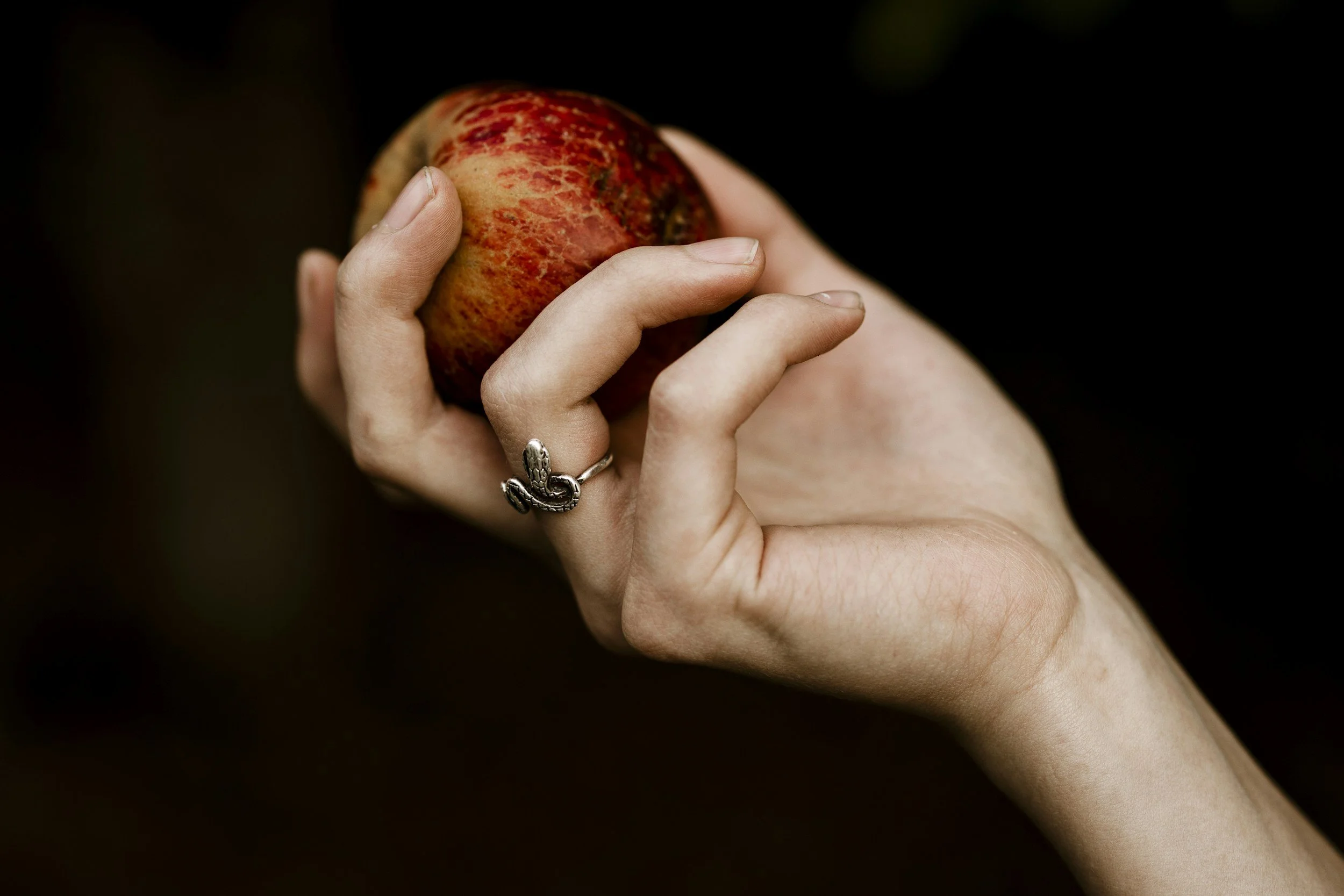
Even if you’re not a Christian, you know the story. A perfect garden. The first humans. Everything existing in harmony and goodness. Then the serpent. The temptation. The eating of the fruit, and the subsequent devastation and fallout.
It’s a tale - literally - as old as time. And perhaps, in one of the times you’ve heard the story, it left you with a nagging question. Something like this: Isn’t the punishment for this just a bit … unreasonable?
If you are a Christian, you know that this one moment of sin was the moment when everything went wrong. We believe we live in a broken world - indeed, everything wrong with us and the world finds its root in that garden. Vulnerability was replaced with shame. Love was overtaken by fear. Order was dissolved into chaos. The fellowship between God and humanity was broken, and along with it, the rest of the world. Men and women had, with their willful disobedience, dug an uncrossable trench between themselves and God. And the rest of creation spiraled downward. Earthquakes, tornadoes, famine, flood—these aren’t ultimately the result of weather patterns, environmental changes, or melting ice caps. They’re the result of sin:
For we know that the whole creation has been groaning together with labor pains until now (Rom. 8:22).
All because of a bite of fruit. So the question comes again - Doesn’t the punishment - all the consequences that came from that act - seem a bit unreasonable?
Maybe an illustration might help. I have a vivid memory when I was in the 5th grade of playing football at recess every single day. And in those days, when we weren't supposed to tackle each other but really did, we would assign one person to rush the passer. But the rules were that you could not rush the passer until you counted to 5 Mississippi. So on one particular day, I found myself as the quarterback, and the person assigned to be the rusher was a young man that tended to get on everyone's nerves. And he liked it that way. He was obnoxious, he was stubborn, he was disrespectful – and he was also a very annoying pass rusher. Instead of playing it cool, he would make little verbal jabs about the quarterback as he was counting out his Misssissippi's. That's what he was doing to me, and something inside me snapped. So when he got to 5 Mississippi, instead of throwing the ball to the receiver, I threw it as hard as I could right at his face. And it hit him right in his face. And everyone cheered.
But think of how the reaction would have been different if instead of the obnoxious kid, there was a 4 year old little girl in pigtails. And I threw the ball as hard as I could and hit her in the face. Same action, but entirely different reaction to it. Not because the action was different, but because the object of the action was different.
Now sin is, of course, very different than this illustration. I only bring it up to show that we minimize the true badness of our sin because we fail to see the true goodness of whom we are sinning against.
Our question about the severity of the consequences and punishment in the garden may just reveal more about our understanding of the goodness and holiness of God than it does about our ability to judge appropriate consequences.
If, on the other hand, we were able to grasp the immensity of God’s goodness; the quality of His perfection; the staggering weight of His glory and holiness - we would likely not think of those consequences for our cosmic rebellion as unreasonable at all.
Instead, we might find something else unreasonable - the grace that God showed. There they were - caught in their rebellion, and trying to cover their guilt and shame with some hastily thrown together fig leaves. And what does God do? He shows grace, and He offers us a glimpse of the even greater grace to come:
The Lord God made garments of skin for Adam and his wife and clothed them (Gen. 3:22).
The Lord provided a covering for them. For their shame. For their guilt. And something had to die in order for Him to do it. And He’s still doing the same thing. For all of us cosmic rebels who have spurned the holiness and goodness of God, He still makes provision. He covers our guilt and shame completely, forgiving us for our sin and giving us the gift of righteousness - but Someone had to die for it. This is the truly unreasonable act of God - that He loved us enough to give His only Son, Jesus, in our stead.
Michael Kelley is a husband, father of three, author, and speaker from Nashville, TN. His latest book is a year-long family devotional guide called The Whole Story for the Whole Family. Find his personal blog at michaelkelley.co.